Years
2020-2022
Institution
Ford’s Theatre Society
When the COVID-19 pandemic shuttered Ford’s Theatre in March 2020, my colleagues in the Education Department and I enhanced our extant virtual field trip series.
To relate the history we interpreted at Ford’s Theatre to the pandemic moment and questions around memorialization (especially during the Black Lives Matter protests of summer 2020), I created two new offerings: Responding to Lincoln’s Assassination (created solely by me) and Ford’s Theatre After the Assassination (co-created with a colleague).
What I Did
Experimented with technology
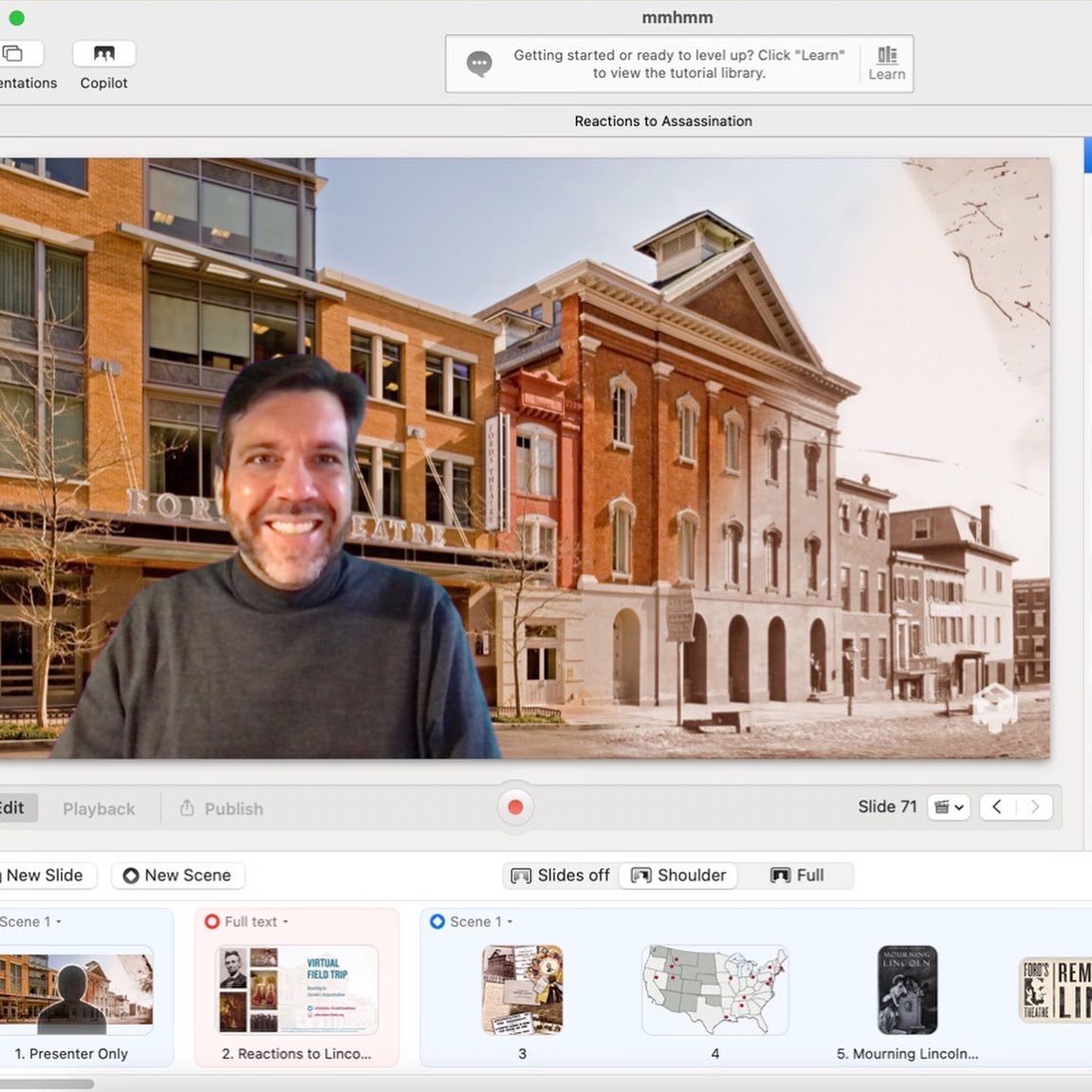
Initially, I used Prezi Video to create an interactive program with me on the screen with my content.
Subsequently, I created new versions in mmhmm (now Airtime), which allowed for creation of an even more immersive viewing experience.
Repurposed existing content, researched new content
Structured the Reactions to Lincoln’s Assassination program as a tour of the United States in 1865, offering a window into how people then dealt with a time of uncertainty and upheaval.
Scoured the Remembering Lincoln digital collection, whose creation I had managed, to select items that spoke to the moment from a diverse range of people, places, and viewpoints.
When we switched from Prezi Video to mmhmm, I found photos of each location to use in the background, creating more of a sense of a tour around the United States in 1865.
Created an interactive program
For the Reactions to Lincoln’s Assassination program, I asked questions with each item to promote primary source literacy and engage learners in the work of doing history. I tailored these questions to different audiences, adapting over time. For example, I structured the session as preparing for a Document-Based Question when I spoke to an AP U.S. History class, whereas I did more general questions that related to the moment for adult history enthusiast audiences.
Co-created an interactive program
My colleague and I created the Ford’s Theatre After the Assassination program about the many manifestations of Ford’s Theatre after Lincoln’s assassination, offering a window into evolving memory of the Civil War, Lincoln, and the legacy of political violence.
To promote the idea of historical contingency, we started by asking participants what they thought people in 1865 would suggest doing with an assassination site—offering a menu based on proposals that surfaced in 1865. We structured similar interactive moments throughout the program.